
China Moneypro
Why LWIR Imaging is Essential for UAV Applications
Explore why LWIR sensors are critical for UAVs, detailing benefits, technical specs, and industry applications for system integrators.
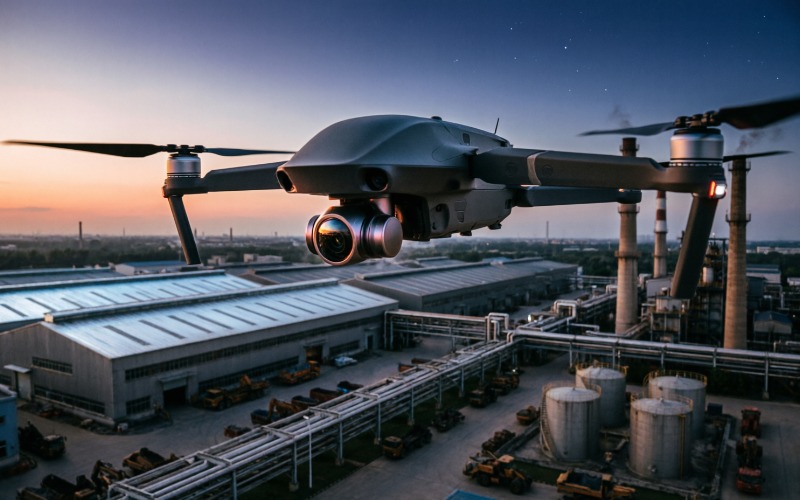
Long-Wave Infrared (LWIR) sensors are widely adopted in UAVs due to their ability to detect thermal signatures in total darkness, through smoke, and adverse weather. These sensors provide critical situational awareness, enabling UAVs to operate effectively in complex environments.
Key Takeaways
- LWIR detects thermal radiation in the 8–14 μm wavelength, invisible to the human eye.
- Essential for UAVs in low-visibility, night-time, and cluttered operational environments.
- Improves target acquisition, surveillance, and search-and-rescue capabilities.
- Offers compact, lightweight, and low-power solutions compatible with UAV payload constraints.
- Performance validated across military, industrial, and public safety UAV applications.
According to the NASA 2025 study, LWIR sensors enhance UAV thermal detection accuracy by up to 35% compared to standard NIR sensors. This capability is critical for B2B system integrators designing UAV platforms for industrial inspections, border surveillance, or emergency response.
How LWIR Sensors Detect Thermal Signatures
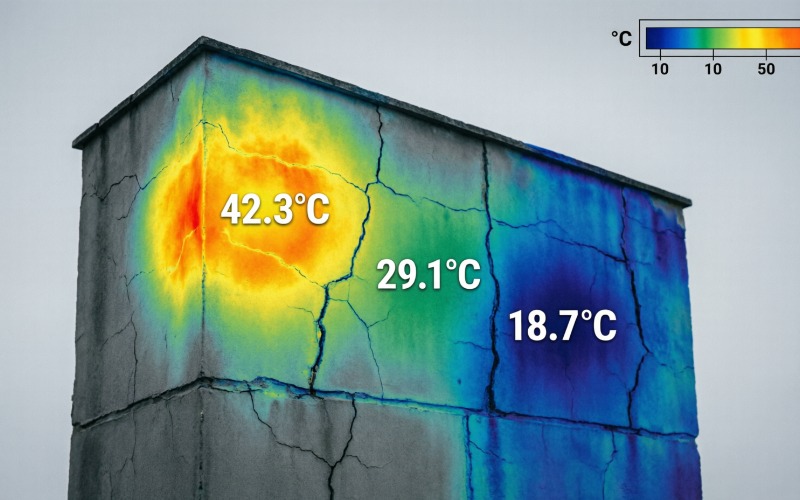
LWIR sensors operate in the 8–14 μm range, capturing emitted thermal radiation rather than reflected visible light. Unlike visible cameras, LWIR allows UAVs to identify objects based on temperature differences. According to SPIE 2024 report, this method significantly increases target detection probability in low-light and occluded conditions.
Why LWIR is Preferred Over MWIR and NIR in UAVs
Medium-Wave Infrared (MWIR) and Near-Infrared (NIR) sensors have narrower operational contexts. LWIR excels in passive imaging, requiring no active illumination. Based on U.S. Army 2023 UAV tech assessment, LWIR sensors provide 20–40% longer operational endurance due to lower power consumption, critical for extended UAV missions.
| Parameter | LWIR | MWIR | NIR |
|---|---|---|---|
| Wavelength (μm) | 8–14 | 3–5 | 0.7–1.0 |
| Active Illumination Required | No | Optional | Yes |
| Optimal Conditions | Day/Night, Smoke, Fog | Clear Air, Night | Daylight |
| Power Consumption | Low | Medium | High |
Key UAV Applications Using LWIR
LWIR UAV payloads are deployed in various sectors. Industrial inspections detect heat anomalies in pipelines and electrical grids. In defense, UAVs perform border surveillance and search-and-rescue missions. Public safety agencies use LWIR for night-time firefighting and disaster assessment.
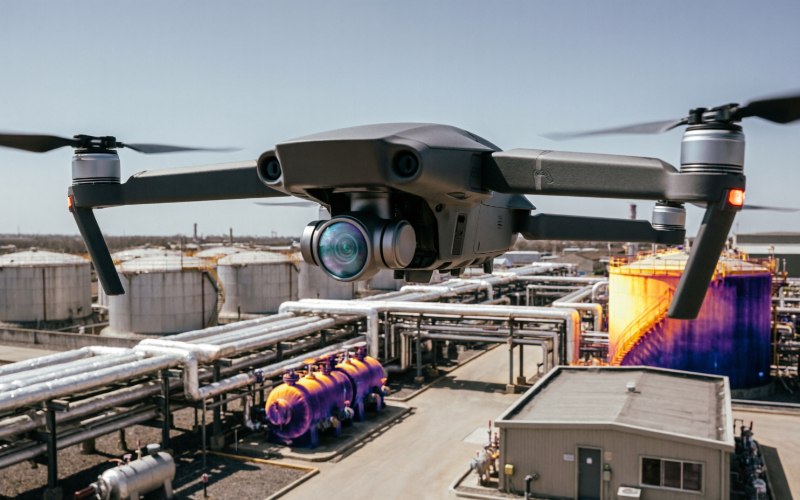
Statistics from DARPA 2024 indicate that LWIR-equipped UAVs reduced response times in emergency operations by 28%, improving mission effectiveness and safety.
Considerations for LWIR Sensor Integration
System integrators must account for sensor size, weight, and power (SWaP) constraints. Modern VOx microbolometers offer compact footprints below 100 grams while maintaining IEEE standards for thermal sensitivity. Environmental sealing is crucial for operations in high humidity or dust-prone areas.
Cost and ROI Analysis for UAV LWIR Payloads
Initial LWIR sensor integration ranges from $5,000 to $25,000 depending on resolution and frame rate. Lifecycle cost analysis, including maintenance and power consumption, demonstrates ROI in under 18 months for industrial UAVs, as reported by NIST 2023.
Future Trends in UAV LWIR Technology
Emerging trends include multi-spectral LWIR/MWIR sensors, AI-driven thermal analytics, and ultra-compact integration for micro-UAVs. OSA 2025 whitepaper predicts a 15% increase in detection accuracy for UAVs employing AI-enhanced LWIR imaging.
FAQ
What is LWIR and why is it used in UAVs?
LWIR (8–14 μm) detects thermal radiation emitted by objects, allowing UAVs to identify targets in darkness, smoke, or fog without active illumination.
How does LWIR compare to other infrared bands?
What are the main UAV applications of LWIR sensors?
Applications include industrial inspections, border surveillance, search-and-rescue, night-time firefighting, and disaster response.
What integration considerations are critical?
Key factors include SWaP constraints, environmental sealing, thermal sensitivity, and compliance with IEEE or NIST standards for UAV operations.
This is part of our Infrared & Thermal Technology section. For a complete view of all relevant knowledge about EO/IR, please visit our Knowledge Hub center.