China Moneypro
SWIR vs MWIR vs LWIR: Understanding the Differences
Explore the technical differences between SWIR, MWIR, and LWIR. Learn how to select the right infrared technology for your system integration projects.
SWIR, MWIR, and LWIR serve different infrared imaging needs: SWIR excels at material inspection and low-light detail, MWIR delivers high-sensitivity long-range thermal detection, and LWIR dominates room-temperature thermal imaging. Choosing the right band depends on distance, temperature sensitivity, and environmental conditions for the target application.
Key Takeaways
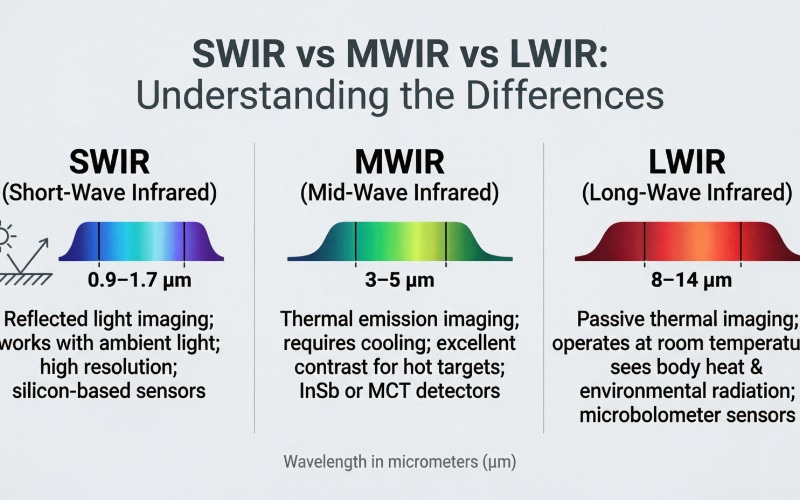
- SWIR, MWIR, and LWIR are types of infrared (IR) imaging technologies used in different applications based on their wavelength range.
- SWIR (Short-Wave Infrared) covers wavelengths between 0.9 to 1.7 microns, ideal for applications such as industrial inspection and security.
- MWIR (Mid-Wave Infrared) spans from 3 to 5 microns and is used in high-performance systems like military surveillance and airborne detection.
- LWIR (Long-Wave Infrared) operates in the 8 to 14-micron range and is commonly used in thermal imaging for surveillance, building diagnostics, and firefighting.
- The choice between SWIR, MWIR, and LWIR depends on the specific system requirements such as temperature sensitivity, resolution, and environmental conditions.
The world of infrared (IR) imaging encompasses a wide variety of technologies, each designed to capture specific wavelengths of light that are not visible to the human eye. Among these, Short-Wave Infrared (SWIR), Mid-Wave Infrared (MWIR), and Long-Wave Infrared (LWIR) are three of the most widely utilized categories in various applications, from military surveillance to industrial inspections. Understanding the differences between these infrared bands is crucial for system integrators who must select the right technology for their specific needs. In this article, we will explore the distinct features, advantages, and applications of SWIR, MWIR, and LWIR, and provide guidance on how to choose the best IR technology for a given use case.
What is SWIR?
Short-Wave Infrared (SWIR) imaging refers to the range of infrared radiation between 0.9 and 1.7 microns. Unlike MWIR and LWIR, SWIR operates at a wavelength that is closer to visible light, allowing it to detect subtle variations in the scene that are often invisible to the human eye.
SWIR Applications
SWIR is widely used in industries where non-visible light can reveal critical information about materials, structures, and objects. Some of its key applications include:
- Industrial Inspection: SWIR is used for inspecting semiconductors, textiles, and food products, where it can detect surface imperfections or contamination that are not visible under normal light.
- Security and Surveillance: SWIR cameras can capture clear images in low light conditions, making them ideal for nighttime surveillance in security applications.
- Agriculture: SWIR is used for monitoring plant health and detecting moisture content in crops, as it can differentiate between healthy and stressed vegetation.
What is MWIR?
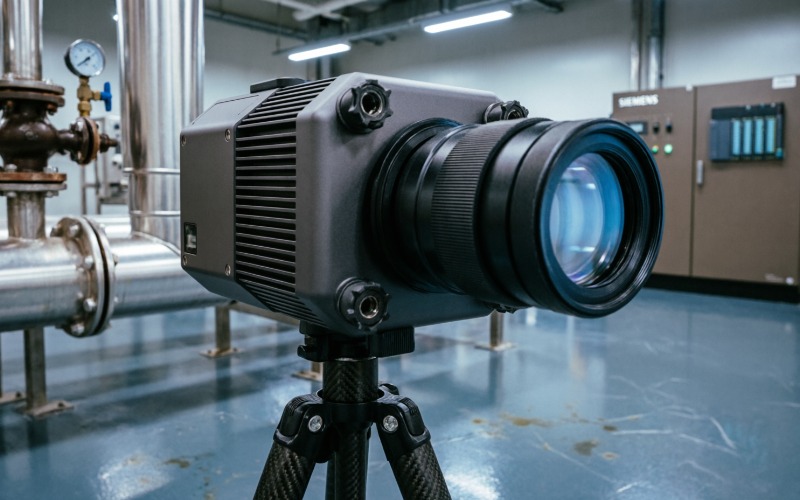
Mid-Wave Infrared (MWIR) imaging operates within the wavelength range of 3 to 5 microns. MWIR systems are sensitive to thermal radiation emitted by warm objects and can provide high-resolution thermal images. This makes MWIR ideal for applications that require precise temperature measurement or the ability to detect objects at a distance, such as in military and defense technologies.
MWIR Applications
MWIR technology is commonly used in high-performance applications where thermal sensitivity and long-range detection are critical. Some of its primary use cases include:
- Military and Defense: MWIR is extensively used in missile guidance systems, targeting, and surveillance for its ability to detect heat signatures from a distance, even in challenging environmental conditions.
- Search and Rescue: MWIR sensors are used in thermal imaging for locating individuals in disaster situations, such as during fires or earthquakes.
- Automotive Safety: MWIR is being integrated into advanced driver-assistance systems (ADAS) for vehicle safety, particularly for detecting pedestrians and animals at night or in low-visibility conditions.
What is LWIR?
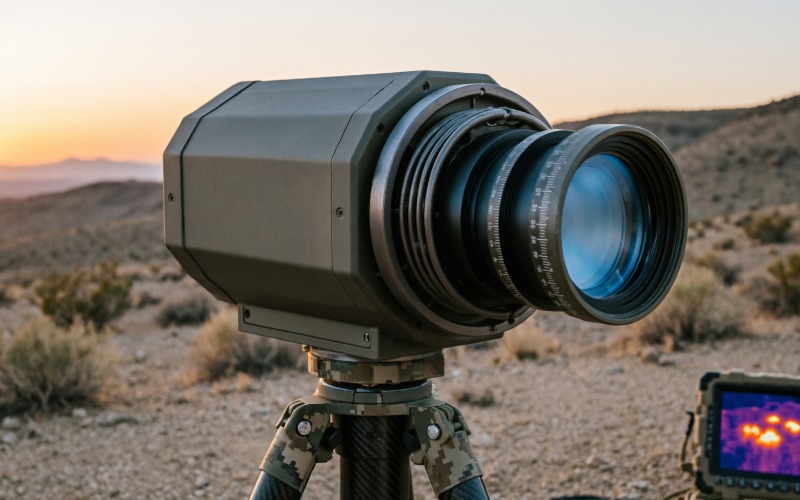
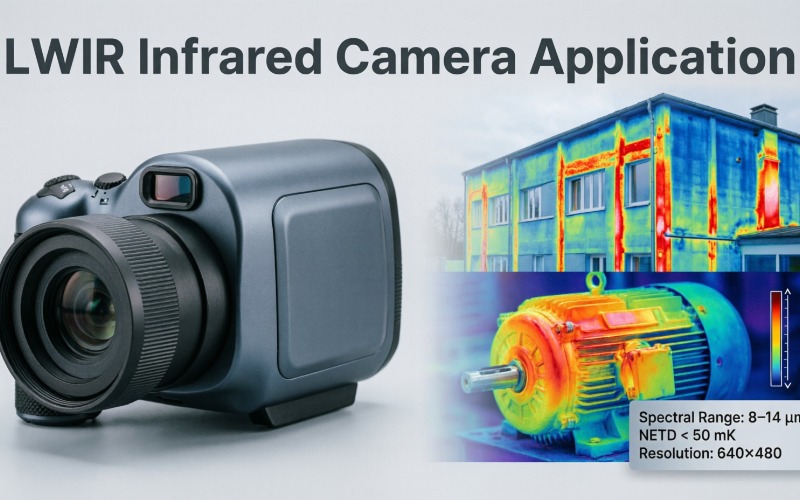
Long-Wave Infrared (LWIR) imaging covers wavelengths from 8 to 14 microns. LWIR systems are sensitive to the thermal emissions from objects that are typically at room temperature or slightly warmer. These systems are primarily used for detecting heat signatures and are best known for their application in thermal cameras.
LWIR Applications
LWIR is the most commonly used IR technology in thermal imaging, and its broad range of applications spans several industries:
- Thermal Surveillance: LWIR is commonly used in security cameras for monitoring buildings, facilities, and outdoor environments. It can detect heat sources like humans or vehicles in total darkness.
- Building Diagnostics: LWIR is used for detecting heat leaks, insulation deficiencies, and water damage in buildings by visualizing temperature differences on surfaces.
- Firefighting: LWIR is an essential tool for firefighters as it helps detect hot spots through smoke, providing crucial data for fire control and rescue operations.
How to Choose Between SWIR, MWIR, and LWIR?
The decision to use SWIR, MWIR, or LWIR technology depends on the specific requirements of the application, including factors such as:
- Wavelength Sensitivity: SWIR is best for applications where subtle material differences are important, MWIR excels at detecting heat sources, and LWIR is optimal for capturing thermal signatures from room-temperature objects.
- Distance: MWIR and LWIR offer superior range for detecting heat sources at long distances, while SWIR is better suited for short-range, high-detail inspection tasks.
- Environmental Conditions: MWIR and LWIR perform well in a wide range of environmental conditions, including darkness and fog, while SWIR is more sensitive to atmospheric conditions like water vapor.
Technical Comparison Table
| Technology | Wavelength Range | Key Applications | Best Use Case |
|---|---|---|---|
| SWIR | 0.9 to 1.7 microns | Industrial inspection, security, agriculture | Short-range inspection, low-light surveillance |
| MWIR | 3 to 5 microns | Military surveillance, search and rescue, automotive | Long-range thermal detection |
| LWIR | 8 to 14 microns | Thermal surveillance, building diagnostics, firefighting | Thermal imaging for monitoring heat sources |
Conclusion
In summary, SWIR, MWIR, and LWIR are three distinct infrared imaging technologies, each suited to different types of applications. SWIR is ideal for high-resolution inspection and low-light surveillance, MWIR is best for long-range thermal detection in military and defense, while LWIR excels in thermal imaging for surveillance, building diagnostics, and firefighting. System integrators must carefully assess the specific needs of their projects to determine which infrared technology is the best fit.
FAQ
What is the primary difference between SWIR, MWIR, and LWIR?
The primary difference lies in their wavelength ranges. SWIR covers 0.9 to 1.7 microns, MWIR spans 3 to 5 microns, and LWIR operates in the 8 to 14-micron range. These differences affect their applications, with SWIR being best for inspection, MWIR for military and surveillance, and LWIR for thermal imaging.
What are the most common applications of SWIR technology?
SWIR is commonly used in industrial inspection, security and surveillance, and agriculture for monitoring plant health and detecting moisture levels.
Why is MWIR preferred in military applications?
MWIR provides excellent long-range detection capabilities and can identify heat signatures from a distance, making it ideal for missile guidance, targeting, and surveillance in military applications.
How does LWIR help in firefighting?
LWIR thermal imaging allows firefighters to see through smoke and detect hot spots, making it an essential tool for fire control and rescue operations.
This is part of our Infrared & Thermal Technology section. For a complete view of all relevant knowledge about EO/IR, please visit our Knowledge Hub center.