
China Moneypro
Key Differences Between Night Vision and Thermal Imaging Systems
Understand the core differences between night vision and thermal imaging, essential for system integrators in the B2B sector.
Key Takeaways
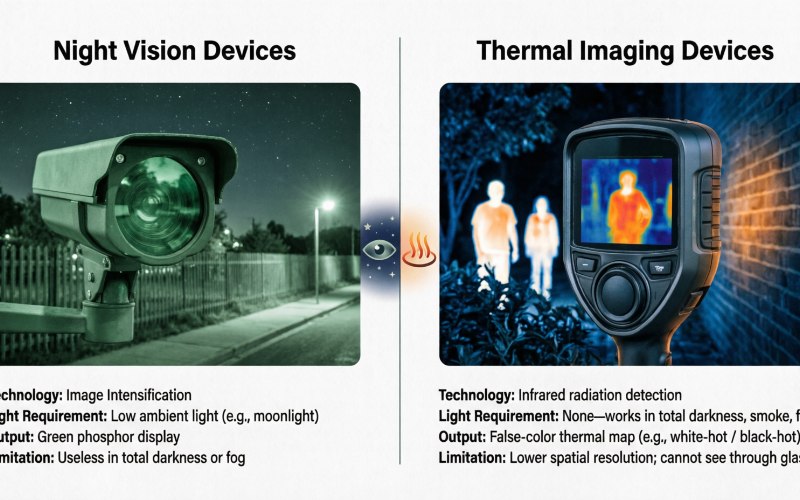
- Night vision technology enhances visibility in low-light conditions using amplified ambient light.
- Thermal imaging detects infrared radiation (heat) to create clear visual representations of temperature variations, even in total darkness.
- Night vision is often used for surveillance in urban environments, while thermal imaging excels in detecting living organisms and heat signatures in any lighting conditions.
- Thermal imaging can be more expensive and requires higher maintenance compared to night vision systems.
- Both technologies are critical in various applications, from security to military, each with distinct advantages depending on the use case.
Understanding Night Vision and Thermal Imaging
Night vision and thermal imaging are two critical technologies used for enhancing visibility in low-light and complete darkness. These technologies play a vital role in various sectors, particularly in surveillance, security, military operations, and industrial applications. However, despite their common purpose—improving visibility under challenging conditions—the two technologies differ significantly in their mechanisms and ideal use cases.
What is Night Vision?
Night vision technology operates by amplifying ambient light, such as starlight or moonlight, to create a visible image in dark environments. Unlike the human eye, which struggles to see in low-light conditions, night vision devices utilize photoelectric sensors to collect and intensify light, making it possible to observe objects in near-darkness.
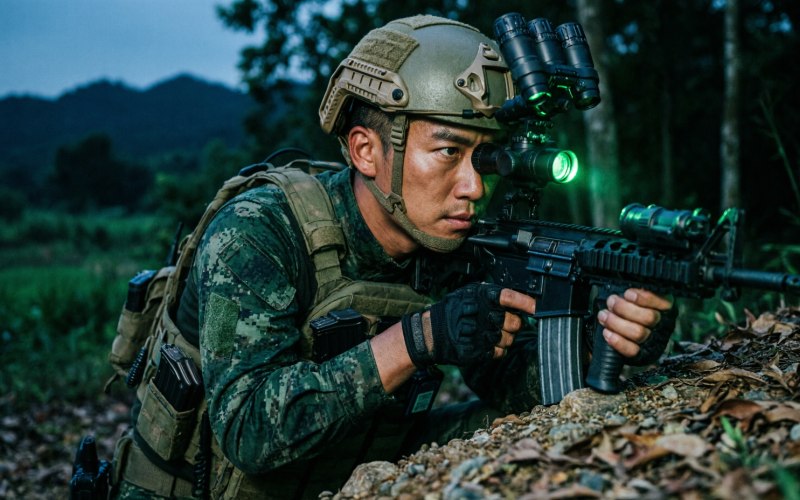
Night vision systems typically use one of two primary technologies:
- Image Intensification (I2): This technology amplifies light from the environment, turning dim light into a visible green-tinted image. It works effectively in low-light conditions but struggles when there is no available light.
- Low-Light Imaging: These systems enhance the available light without necessarily amplifying it. Low-light cameras are commonly used in environments where ambient light is limited but not entirely absent.
Night vision systems are best used in environments with some light source—whether it be natural or artificial. Common applications include surveillance, border patrol, and tactical military operations, where seeing in low-light conditions can provide a tactical advantage.
What is Thermal Imaging?
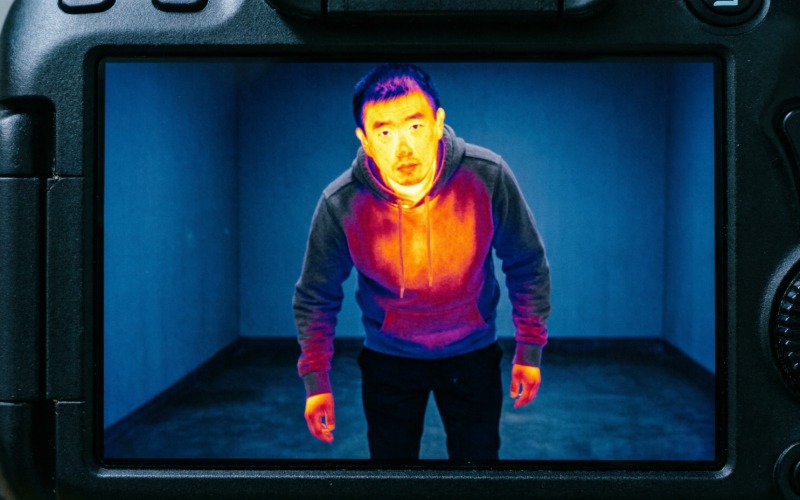
Thermal imaging technology, on the other hand, detects the heat emitted by objects and converts this information into a visual representation. All objects, living or non-living, emit infrared radiation as a form of heat. Thermal cameras capture these emissions and generate an image that highlights temperature differences in the scene.
Thermal imaging systems have a significant advantage over night vision in that they do not require any visible light to operate. As long as an object emits heat, it can be detected and displayed clearly in the thermal image. This makes thermal imaging especially useful for operations in total darkness or obscured environments such as smoke or fog.
Key Differences Between Night Vision and Thermal Imaging
While both technologies serve to enhance visibility in low-light or dark conditions, they achieve this goal through fundamentally different means. Below are the primary distinctions between night vision and thermal imaging systems:
1. Detection Mechanism
Night vision works by capturing and amplifying available light. In contrast, thermal imaging detects infrared radiation (heat) emitted by objects. As a result, night vision systems are more dependent on the presence of light, whereas thermal imaging is independent of light and can operate in complete darkness.
2. Image Characteristics
Night vision devices typically produce monochrome images, often in shades of green, while thermal imaging displays color-coded images to indicate varying levels of heat. The temperature contrast in thermal imaging provides more detailed insights into the environment, such as identifying warm bodies in a cold area.
3. Sensitivity to Environmental Conditions
Night vision systems are sensitive to environmental light conditions and perform poorly when there is little or no ambient light. On the other hand, thermal imaging works effectively in any lighting condition, including total darkness, fog, smoke, or other obstructions that might limit visibility for traditional night vision.
4. Range and Resolution
In general, thermal imaging has a longer detection range compared to night vision systems, especially in complete darkness. However, night vision systems can offer better resolution and image clarity in environments where ambient light is available. The resolution of thermal images can be lower, which might reduce the clarity of fine details in some cases.
5. Cost and Maintenance
Thermal imaging systems are generally more expensive than night vision devices, particularly when they offer high resolution and long-range capabilities. Additionally, thermal imaging requires more maintenance and calibration due to its sensitivity to temperature changes, while night vision systems are usually more cost-effective and easier to maintain.
Applications and Use Cases
Both night vision and thermal imaging technologies have wide-ranging applications across various sectors. Below, we explore the most common use cases for each technology:
Night Vision Applications
Night vision technology is widely used in environments where there is some form of ambient light, including:
- Security and Surveillance: Night vision cameras are ideal for monitoring urban environments, parking lots, and borders where there is some ambient light but complete darkness might also occur at times.
- Military and Tactical Operations: Night vision goggles and scopes are extensively used in military operations for surveillance and target identification in low-light conditions.
- Wildlife Observation: Researchers and wildlife enthusiasts use night vision to observe nocturnal animals without disturbing their natural behavior.
Thermal Imaging Applications
Thermal imaging is used in situations where visibility is impaired, regardless of light conditions. Common applications include:
- Search and Rescue: Thermal cameras are invaluable in rescue operations, as they can locate people trapped in smoke, rubble, or dark areas by detecting body heat.
- Industrial Inspections: Thermal cameras are used for detecting heat loss, overheating electrical components, and identifying faults in machinery.
- Military and Defense: Thermal optics are essential for detecting enemy movement in complete darkness or low-visibility environments.
- Firefighting: Firefighters use thermal imaging to locate hot spots and find trapped individuals in hazardous, smoke-filled environments.
Choosing Between Night Vision and Thermal Imaging
The choice between night vision and thermal imaging depends on the specific requirements of the task at hand. For example:
- If the environment has ambient light (e.g., moonlight, streetlights), night vision may be the better option.
- If you need to detect heat signatures or observe in total darkness, thermal imaging will provide better results.
Conclusion
Both night vision and thermal imaging technologies play crucial roles in enhancing visibility in low-light and challenging conditions. While night vision systems are effective in low-light environments where some light is available, thermal imaging excels in detecting heat and works in total darkness or obscured conditions. Understanding the key differences between these two technologies will help system integrators choose the right solution based on the unique needs of each application.
FAQs
Can thermal imaging work in daylight?
Yes, thermal imaging can operate in any light conditions, including daylight, because it detects heat, not visible light.
What is the range of night vision and thermal imaging?
The range varies based on the model and technology used, but generally, night vision has a shorter range than thermal imaging, especially in complete darkness.
Is thermal imaging more expensive than night vision?
Yes, thermal imaging systems are generally more expensive than night vision systems due to the advanced technology and higher resolution capabilities they offer.
Which is better for wildlife observation, night vision or thermal imaging?
For wildlife observation, night vision is generally better for observing animals in low-light environments, while thermal imaging is better for detecting animals based on their body heat.
Can night vision and thermal imaging be combined?
Yes, some modern systems combine both night vision and thermal imaging to provide a broader range of visibility in different environments.
This is part of our Infrared & Thermal Technology section. For a complete view of all relevant knowledge about EO/IR, please visit our Knowledge Hub center.