
China Moneypro

EO/IR Gimbal Camera Payloads
China Moneypro provides stabilized EO/IR gimbal camera payloads for airborne, ground, and mobile platforms. Our payloads support day/night imaging for surveillance, inspection, and security operations.
Choose a category below to match your platform. Then compare products by sensor configuration, stabilization, and integration interfaces.
What is an EO/IR Gimbal Payload?
An EO/IR gimbal camera payload is a stabilized imaging system that typically combines an electro-optical (visible) camera and an infrared thermal camera. The gimbal keeps the line of sight stable, so operators can observe and track targets during motion.
Key benefits:
- Stabilized day/night imaging for moving platforms
- Better target observation in low visibility
- Flexible sensor configurations for different missions
- Integration-ready outputs for platform systems
Browse by Platform
Maritime & Ground EO/IR System
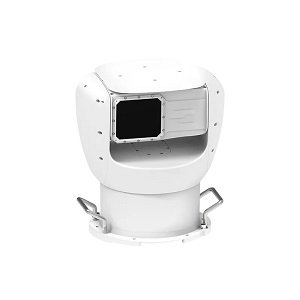
Stabilized day/night imaging for coastal watch, perimeter security, and outdoor monitoring in changing weather.
UAV Gimbal Payloads
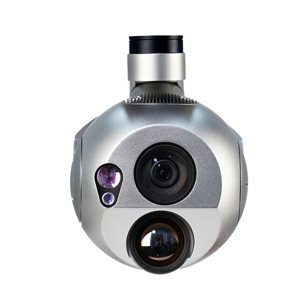
Stabilized EO/IR imaging payloads for drones and unmanned platforms where size, weight, and power matter.
Vehicle-Mounted EO/IR Systems
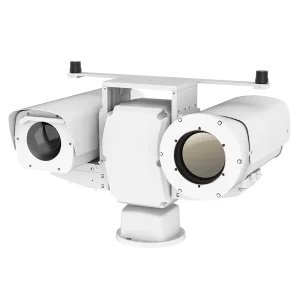
Mobile EO/IR systems that help operators keep observation stable while vehicles move and conditions change.
Typical Sensor Configurations
- EO + IR dual-sensor payloads
- EO/IR payloads with optical zoom options
- Payloads with tracking features (depending on model)
- Optional rangefinding/laser functions (depending on system requirements)
View the difference between each sensors at our knowledge hub.
How to Choose the Right EO/IR Payload
The best choice depends on your platform, environment, and integration workflow. Use the guide below to narrow down the right category before comparing product details.
| Platform | Primary needs | Key selection points |
|---|---|---|
| UAV | Size, weight, power, vibration | Stabilization axis, payload mass, mounting, video latency, control interface |
| Maritime / Ground | Outdoor operation, 24/7 monitoring | Weather sealing, sensor choice, mounting, remote control workflow, output interface |
| Vehicle-mounted | Shock, motion, operator workflow | Stabilization, mounting, in-vehicle control, output interface, service access |
EO/IR Gimbal Camera FAQs
What does EO/IR mean?
EO/IR means electro-optical (visible) imaging plus infrared (thermal) imaging in one system. It helps operators observe targets in daylight and at night. Thermal imaging can also improve visibility in low-contrast scenes.
What is an EO/IR gimbal camera payload?
An EO/IR gimbal camera payload is a stabilized camera system that keeps the line of sight steady while the platform moves. Many payloads combine a visible camera and a thermal camera. This improves observation and tracking during motion.
What is the difference between an EO/IR gimbal and a fixed camera?
A gimbal can pan and tilt while stabilizing the view against vibration and movement. A fixed camera has limited pointing ability and depends more on the platform orientation. For moving platforms, a gimbal usually provides better control and steadier imagery.
How do I choose an EO/IR payload for my platform?
Start with the platform type and operating environment. Then check size/weight/power limits, stabilization needs, and how you will connect video and control. Finally, confirm mounting, operator workflow, and system compatibility.
What outputs are commonly used for EO/IR payloads?
Many EO/IR payloads provide standard video streaming or video output formats, depending on the model. Control is typically handled through a compatible interface agreed in the system design. The best approach is to match payload output and control to your platform requirements.
Why is stabilization important for EO/IR imaging?
Stabilization reduces shake and helps keep targets centered. As a result, video looks clearer and tracking is easier during movement. It also supports more reliable observation when the platform is vibrating or turning.
Related EO/IR and Imaging Products
Need Help Selecting an EO/IR Gimbal Payload?
Share your platform type, environment, and integration needs. China Moneypro can recommend a suitable EO/IR gimbal payload and provide specifications.