
China Moneypro
Thermal Imagers in Defense Aerospace
Explore thermal imager applications in defense aerospace. Master cooled MWIR/LWIR payload integration, UAV tracking, and targeting. Read our guide!
Thermal imager applications in defense aerospace demand high-performance electro-optical integration. Cooled MWIR detectors dominate long-range aerial targeting, while uncooled LWIR microbolometers excel in low-altitude UAV payloads. Mastering SWaP-C optimization and gyro-stabilization ensures mission-critical situational awareness and superior threat detection in modern warfare.
Key Takeaways
- Cooled MWIR systems are mandatory for long-range, high-altitude targeting pods due to high sensitivity.
- Uncooled VOx microbolometers optimize SWaP-C for tactical multi-rotor UAV surveillance payloads.
- Gyro-stabilized gimbals combined with AI sensor fusion drastically increase probability of detection.
- High Operating Temperature (HOT) MWIR is the emerging standard for next-generation defense aerospace.
- Proper integration requires strict adherence to military standards for vibration and thermal shock.
Engineering Airborne EO/IR Systems for Modern Warfare
Airborne optoelectronics represent the cutting edge of modern military capability. Consequently, thermal imager applications in defense aerospace require extreme precision. System integrators face enormous pressure to deliver perfect situational awareness. Modern combat operations occur in degraded visual environments. Standard optical cameras fail during night missions, heavy smoke, or adverse weather. Therefore, infrared detectors are mission-critical. Aerospace platforms deploy integrated electro-optical and infrared (EO/IR) gimbals to detect, track, and engage targets. Integrators must optimize Size, Weight, Power, and Cost (SWaP-C). Furthermore, they must guarantee structural integrity against intense aircraft vibrations. Successful payload design hinges on selecting the right focal plane array (FPA) technology. Learn more about core EO/IR technology principles. Advanced systems often align with frameworks developed by agencies like DARPA.
Cooled MWIR vs Uncooled LWIR Microbolometers
Defense contractors constantly debate between cooled and uncooled infrared architectures. Uncooled Long-Wave Infrared (LWIR) systems rely on Vanadium Oxide (VOx) or Amorphous Silicon microbolometers. These detectors operate at ambient temperatures. Consequently, they require less power and are significantly lighter. Tactical UAVs heavily utilize uncooled LWIR cores. Conversely, cooled Mid-Wave Infrared (MWIR) detectors use materials like Indium Antimonide (InSb) or Mercury Cadmium Telluride (MCT). These systems require a Stirling cryocooler to chill the FPA to cryogenic temperatures (typically 77K). This cooling eliminates thermal noise. As a result, cooled MWIR achieves extreme sensitivity. They can detect thermal signatures from miles away. Therefore, high-altitude aircraft and attack helicopters rely on cooled MWIR for long-range targeting.
| Specification | Cooled MWIR (Mid-Wave) | Uncooled LWIR (Long-Wave) |
|---|---|---|
| Spectral Band | 3-5 µm | 8-14 µm |
| Sensitivity (NETD) | < 20 mK | < 40 mK |
| Operating Temperature | Cryogenic (~77K) | Ambient |
| Primary Defense Use | High-altitude targeting, missile warning | Tactical UAVs, short-range ISR |
| SWaP-C Profile | High (Requires heavy cooler) | Low (Compact, lightweight) |
| Maintenance | High (Cryocooler lifespan) | Low (Solid-state reliability) |
Primary Thermal Imager Applications in Defense Aerospace
Unmanned Aerial Vehicles Surveillance Payloads
Tactical drones have transformed infantry combat. Thermal imager applications in defense aerospace are highly visible in UAV ISR (Intelligence, Surveillance, and Reconnaissance) payloads. Group 1 and Group 2 UAVs possess strict weight limits. Consequently, integrators deploy uncooled VOx microbolometers with a 12µm or 8µm pixel pitch. Smaller pixel pitches allow for smaller optics while maintaining resolution. This directly reduces UAV payload weight. Moreover, thermal imaging allows drone operators to detect hidden enemy combatants at night. The high thermal contrast of human bodies against cold terrain ensures rapid target acquisition.
Targeting Pods and Threat Detection Systems
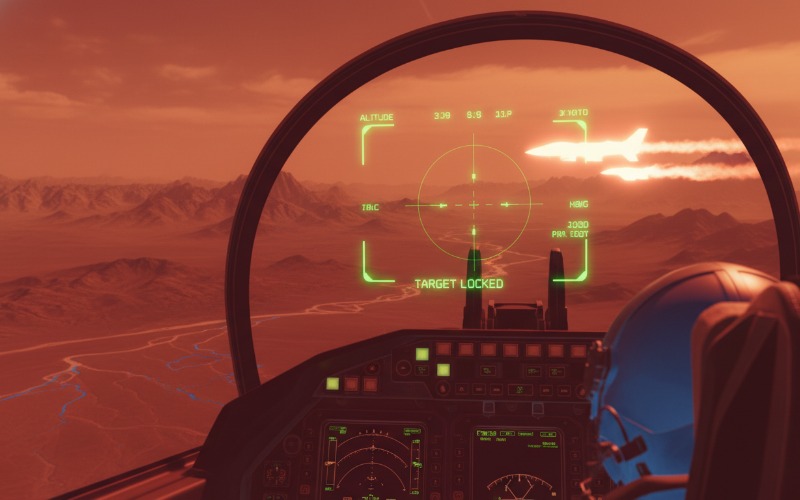
Fast-jet fighter aircraft and attack helicopters carry advanced targeting pods. These pods execute precision strike missions. They combine cooled MWIR cameras with laser rangefinders and laser designators. The MWIR band cuts through atmospheric humidity better than LWIR at long ranges. Therefore, cooled sensors provide the standoff distance required for pilot safety. The thermal imager locks onto the heat signature of enemy armor or infrastructure. Furthermore, infrared search and track (IRST) systems act as passive radar. They detect the exhaust plumes of enemy aircraft without emitting detectable radar waves.
Degraded Visual Environment Piloting
Rotary-wing aircraft face severe hazards during takeoff and landing. Rotor wash kicks up dense dust clouds, causing “brownouts.” In a brownout, pilots lose all visual reference to the ground. This leads to catastrophic spatial disorientation. Thermal imagers penetrate obscurants much better than the human eye. Integrated aviation helmets project LWIR video directly onto the pilot’s visor. Consequently, the pilot can “see” through the dust. Blending thermal video with millimeter-wave radar provides a comprehensive DVE solution. This application saves lives and preserves expensive aerospace assets.
Overcoming Field Integration Challenges
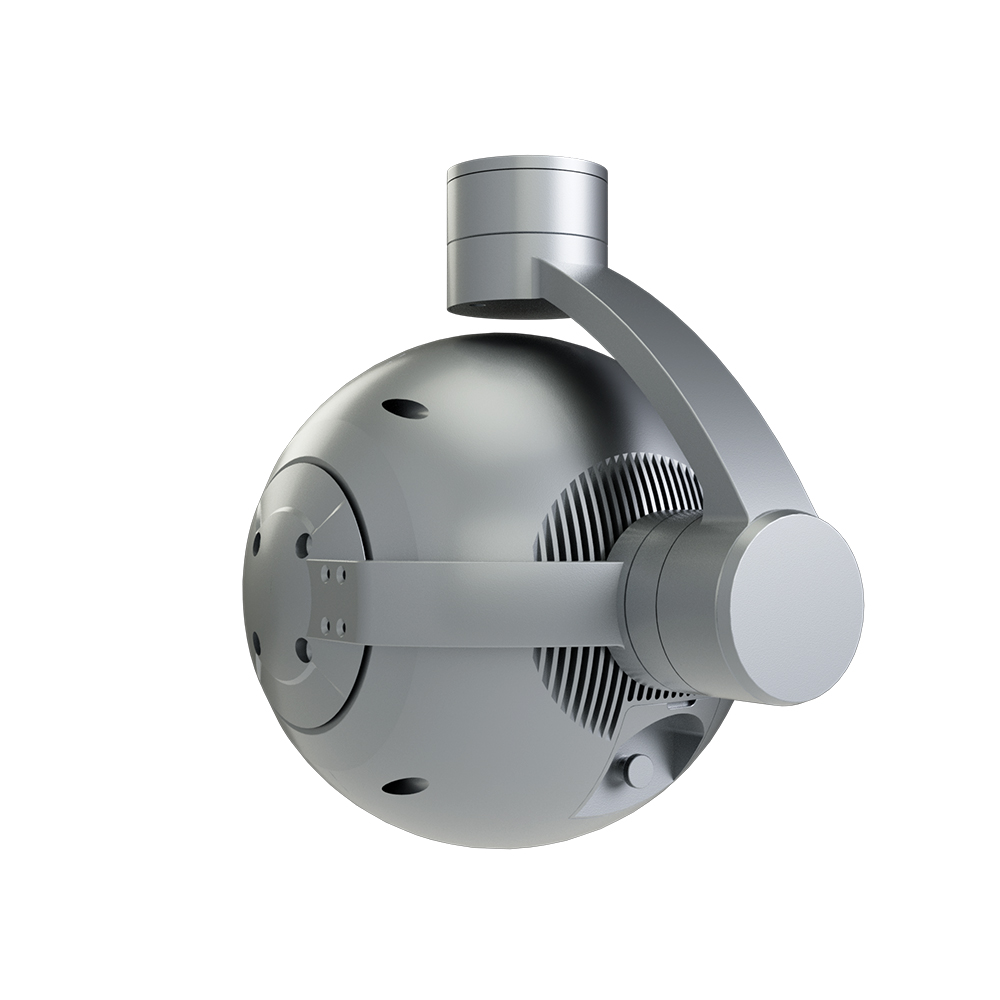
Theoretical payload designs often fail upon contact with actual flight dynamics. During a recent integration of a multi-sensor payload for a Tier-1 defense contractor, my engineering team encountered severe harmonic vibrations. The aircraft’s rotary engines induced massive jitter into the optical path. Uncorrected, this vibration blurs the infrared image and ruins targeting accuracy. We had to implement an advanced active PID control loop within the gyro-stabilization mount. We tuned the PID controller to counteract the specific resonant frequencies of the helicopter frame. Additionally, we utilized mechanical dampeners made from advanced elastomers. The combination of physical isolation and active electronic stabilization maintained the cooled MWIR detector’s line of sight perfectly. First-hand engineering experience proves that buying a high-end thermal core is only ten percent of the battle. Mastering the opto-mechanical integration is the true challenge.
Advanced Image Processing and AI Sensor Fusion
Raw thermal video requires extensive processing. Without digital enhancement, thermal images lack fine edge details. Modern integrators use advanced algorithms to maximize clarity. Non-Uniformity Correction (NUC) algorithms calibrate the FPA dynamically. This eliminates fixed-pattern noise caused by varying pixel sensitivities. Furthermore, Local Area Contrast Enhancement (LACE) highlights subtle thermal differences in muddy environments. AI sensor fusion is the newest frontier. Aerospace payloads now feature edge-computing modules. These processors run convolutional neural networks directly on the gimbal. The AI automatically detects and classifies objects like tanks, personnel, or artillery. Consequently, it reduces the cognitive load on the pilot or operator. Sensor fusion blends optical, thermal, and radar data into one unified tactical display.
The Future of Airborne Thermal Detectors
The defense aerospace sector demands constant innovation. High Operating Temperature (HOT) MWIR technology is revolutionizing payload design. Traditional cooled sensors require cooling to 77K. HOT MWIR detectors use Type-II Superlattice (T2SL) materials. These advanced arrays operate efficiently at 150K. Therefore, the cryocooler works less aggressively. This reduces power consumption and drastically extends the cooler’s operational lifespan. Additionally, dual-band FPAs are emerging rapidly. These sensors detect both MWIR and LWIR photons simultaneously. Dual-band imaging allows algorithms to cross-reference thermal signatures, defeating enemy camouflage and thermal flares. Consequently, future aircraft will feature unprecedented multi-spectral awareness.
Action-Oriented Closure
Selecting and integrating the right thermal imaging module dictates the success of modern aerospace platforms. You cannot afford payload failures during mission-critical deployments. Proper SWaP-C optimization, ruggedized stabilization, and sensor selection require deep optoelectronics expertise. Do not leave your integration to chance. Download my Maintenance Checklist for Airborne EO/IR Gimbals today. Alternatively, schedule my Equipment Consultation to architect your next-generation defense payload.
Frequently Asked Questions
What is the difference between MWIR and LWIR in defense aerospace?
MWIR (Mid-Wave Infrared) operates in the 3-5 µm range and typically requires cryogenic cooling. It offers superior long-range resolution and performs better in high humidity. Defense aerospace uses MWIR for high-altitude targeting pods. LWIR (Long-Wave Infrared) operates in the 8-14 µm range and is usually uncooled. It is highly effective for short-to-medium range detection and is favored in low SWaP-C tactical UAV payloads.
How do gyro-stabilized gimbals improve thermal imager performance?
Aircraft generate intense mechanical vibrations and experience rapid aerodynamic movements. Gyro-stabilized gimbals use inertial measurement units (IMUs) and active motors to counteract these forces in real-time. This stabilization keeps the thermal camera’s line of sight perfectly still. Consequently, it prevents image blur, allowing for accurate long-range target identification and continuous tracking.
What does SWaP-C mean in electro-optical payload integration?
SWaP-C stands for Size, Weight, Power, and Cost. In defense aerospace, platform capacity is strictly limited. Integrators must select thermal imagers that deliver maximum detection performance while consuming minimal power and adding minimal weight to the aircraft. Optimizing SWaP-C is critical for extending drone flight times and maximizing jet fighter maneuverability.
Why is High Operating Temperature (HOT) MWIR important?
Standard MWIR detectors require cooling to 77K, which puts massive strain on the Stirling cryocooler, leading to frequent maintenance. HOT MWIR sensors use advanced materials that allow them to operate efficiently at higher temperatures, such as 150K. This reduces the burden on the cooler, drastically increasing the system’s reliability and operational lifespan in harsh military environments.