
China Moneypro
Thermal Optics Selection Guide
Master the procurement of infrared modules. Expert analysis on NETD, pixel pitch, VOx sensors, and SWaP constraints for B2B system integrators.
Selecting the correct infrared imaging module is a critical engineering challenge that dictates the success of final integrated systems. For B2B system integrators working on UAV payloads, border security surveillance, or industrial predictive maintenance tools, the datasheet tells only half the story. High-performance thermal imaging relies on a delicate balance between sensitivity, resolution, optics, and electronic integration.
Key Takeaways for Procurement Engineers
- Prioritize NETD Sensitivity: Look for Noise Equivalent Temperature Difference values below 40mK (millikelvins) to ensure high contrast in low-thermal-gradient environments.
- Detector Material Matters: Vanadium Oxide (VOx) generally offers superior sensitivity and image uniformity compared to Amorphous Silicon (a-Si).
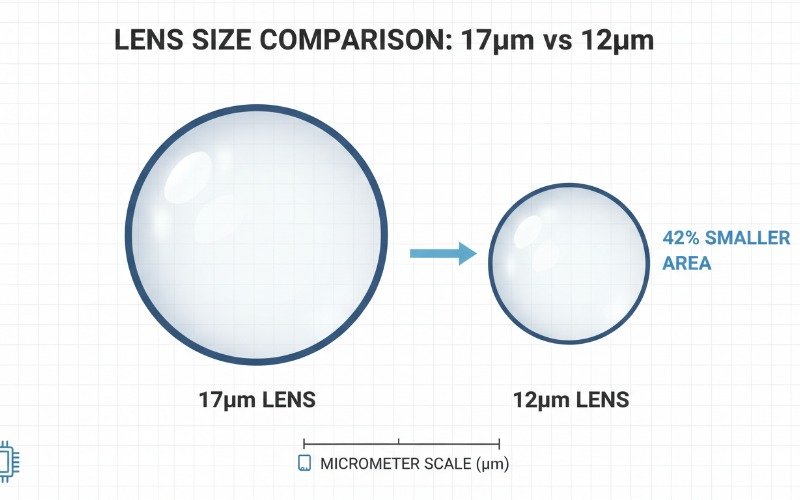
- Pixel Pitch Trends: The industry is shifting from 17μm to 12μm pixel pitch, allowing for smaller optics and lighter payloads without sacrificing range.
- Verify Lens F-Number: An F/1.0 lens transmits significantly more thermal energy than an F/1.2 lens, directly impacting the effective system sensitivity.
- Integration Interfaces: Ensure compatibility with digital standards like MIPI CSI-2 or parallel interfaces to minimize latency in embedded systems.
Understanding Detector Types and Materials
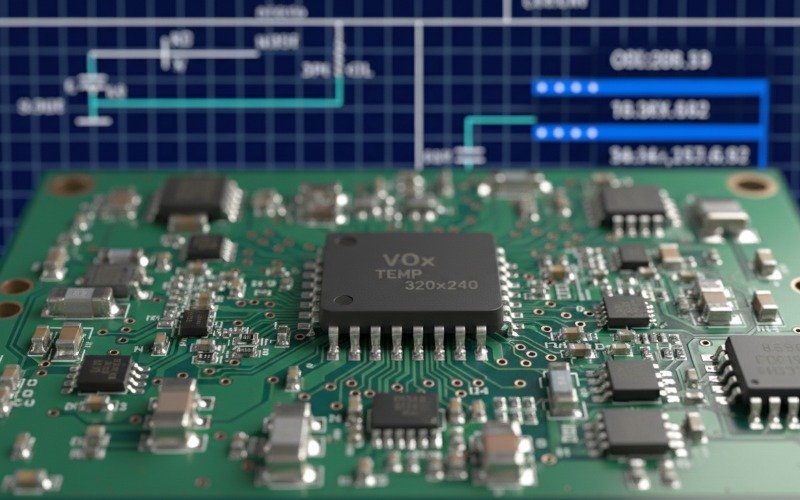
The heart of any thermal optical system is the Focal Plane Array (FPA). Before evaluating optics or housing, integrators must validate the sensor technology itself. The material composition of the microbolometer defines the fundamental noise floor and temperature stability of the system.
Vanadium Oxide versus Amorphous Silicon
Two primary materials dominate the uncooled infrared detector market. Vanadium Oxide (VOx) and Amorphous Silicon (a-Si). While both are viable, VOx is widely regarded as the premium choice for high-end industrial and defense applications. VOx microbolometers typically exhibit a higher Temperature Coefficient of Resistance (TCR), meaning they undergo a larger resistance change for a given temperature change. This physical property translates directly to higher sensitivity and lower noise.
Amorphous Silicon sensors are often more cost-effective to manufacture due to their compatibility with standard silicon foundry processes. However, a-Si sensors historically suffer from higher spatial noise and lower sensitivity (higher NETD). For applications requiring precise radiometric data or long-range detection in humid conditions, VOx is the requisite standard.
Cooled versus Uncooled Architectures
Most commercial and industrial applications utilize uncooled LWIR (Long-Wave Infrared) detectors operating in the 8–14μm spectral band. These systems rely on the change in resistance of the microbolometer pixels. They are compact, solid-state, and require minimal maintenance.
Cooled detectors (MWIR) operating in the 3–5μm band utilize a cryogenic cooler (Dewar assembly) to reduce sensor temperature to cryogenic levels. This eliminates thermal noise, allowing for incredibly fast frame rates and extreme sensitivity. However, cooled systems have a limited lifespan due to the mechanical cooler and come with a significantly higher SWaP (Size, Weight, and Power) footprint. Uncooled modules are the preferred choice for 95% of commercial integration projects.
Critical Performance Specifications Analysis
When reviewing a manufacturer’s technical documentation, three metrics stand out as non-negotiable indicators of quality: NETD, Resolution, and Frame Rate.
Evaluating Thermal Sensitivity and NETD
Noise Equivalent Temperature Difference (NETD) is the signal-to-noise ratio of the detector. It represents the smallest temperature difference the camera can distinguish from the background noise. It is measured in millikelvins (mK).
A lower NETD value indicates a better detector. Standard industrial cameras may offer <50mK, which is sufficient for electrical inspections where hotspots are obvious. However, for security, search and rescue, or outdoor monitoring, an NETD of <40mK or even <30mK is necessary. In conditions with low thermal contrast—such as a foggy morning or a rainy night—a high-sensitivity detector can resolve targets that a <50mK sensor would lose in the noise floor.
Pixel Pitch and Sensor Resolution
Pixel pitch refers to the distance between the centers of two adjacent pixels on the FPA, measured in microns (μm). The industry standard has shifted from 17μm to 12μm. A smaller pixel pitch allows for a physically smaller sensor chip for the same resolution. This is crucial for optics sizing.
A 12μm sensor allows the use of a lens with a shorter focal length to achieve the same optical magnification as a 17μm sensor with a longer lens. This results in significant weight and cost savings for the optical assembly. Common resolutions include:
- 384 x 288 (QVGA): Entry-level standard, sufficient for short-range detection.
- 640 x 512 (VGA): The professional standard, offering four times the pixel count of QVGA, essential for detailed analytics and mid-to-long range identification.
- 1280 x 1024 (HD): High-end specialty applications requiring wide field of view and high digital zoom capabilities.
Lens and Optical Interface Requirements
The detector is useless without a high-transmission lens. Infrared optics are typically made from Germanium, Chalcogenide glass, or Zinc Selenide. Unlike visible light glass, these materials are expensive and difficult to manufacture.
F-Number and Energy Transmission
In thermal optics, the F-number (ratio of focal length to aperture diameter) is critical. Because thermal energy is scarce, a “faster” lens (lower F-number) is desirable. An F/1.0 lens allows the full potential of the detector to be realized. Many manufacturers cut costs by pairing a high-quality sensor with an F/1.1 or F/1.2 lens, which significantly reduces the amount of infrared radiation reaching the FPA. Always verify the F-number when buying a complete module.
Athermalization for Environmental Stability
Optics materials like Germanium have a high refractive index change with temperature. Without compensation, a thermal camera will lose focus as the ambient temperature shifts. Integrators must verify the athermalization method used:
- Passive Athermalization: Uses mechanical materials with opposing thermal expansion coefficients to mechanically move lens elements, maintaining focus automatically.
- Active Athermalization: Uses motorized focus drives controlled by temperature sensors. This is more complex and power-hungry but offers greater precision.
- Fixed/Hard Carbon: For low-cost applications, fixed focus lenses with a large depth of field may be used, but performance degrades in extreme temperatures.
Digital Interfaces and SWaP Factors
For system integrators, the electrical interface is where the hardware meets the software. The raw data from the sensor must be processed and transmitted to the host processor with minimal latency.
Video Output Standards
Legacy systems often used analog PAL/NTSC video, but modern AI-driven systems require digital raw data (14-bit or 16-bit) to perform radiometric calculations. Common interfaces include:
- MIPI CSI-2: The standard for mobile and embedded devices. Ideal for integration with NVIDIA Jetson or FPGA-based edge computing platforms.
- Camera Link: A robust, high-bandwidth standard used in industrial machine vision.
- USB 3.0 / UVC: Plug-and-play simplicity, mostly used for handheld or PC-connected devices.
- LVDS / CMOS: Parallel interfaces for direct raw data access, requiring custom FPGA driver development.
SWaP Considerations for UAVs
Size, Weight, and Power (SWaP) are the limiting factors for drone payloads. A thermal core with a heavy lens can drastically reduce flight time. 12μm cores are particularly advantageous here, as they allow for smaller optics. Furthermore, power consumption should be scrutinized. A typical uncooled core should consume less than 1.5W during steady-state operation. High power consumption not only drains batteries but creates internal heat that can degrade sensor noise performance (NETD).
Comparative Analysis of Thermal Technologies
| Feature | Uncooled VOx (12μm) | Uncooled a-Si (17μm) | Cooled MWIR |
|---|---|---|---|
| NETD Sensitivity | <30mK to <40mK | <50mK to <60mK | <20mK |
| Pixel Pitch | 12μm (Compact Optics) | 17μm (Larger Optics) | 15μm – 30μm |
| Maintenance | Zero Maintenance | Zero Maintenance | Cooler replacement every 10k-20k hours |
| Frame Rate | 30Hz – 60Hz | 30Hz – 60Hz | 100Hz – 1000Hz+ |
| Cost | Moderate | Low | Very High |
| Primary Application | UAV, Security, ADAS | Budget Handhelds | Long-range Defense, Gas Detection |
Technical comparison of primary infrared detector technologies
Frequently Asked Questions
Why is radiometric capability important for integration?
Does frame rate affect thermal image quality?
What is the difference between Lens Focal Length and FOV?
Conclusion
Procuring thermal optics requires a deep dive into the physics of infrared detection. By prioritizing VOx technology, verifying NETD specifications under 40mK, and carefully matching the lens F-number to the sensor, system integrators can build superior EO/IR systems. Always test the specific integration interfaces (MIPI, USB, Camera Link) with your host processing hardware before committing to volume purchasing.